
A smart polyhydroxyalkanoate-hyaluronic acid hybrid biphasic delivery platform for enhanced Alzheimer’s symptom management via sustained huperzine A release


1 Zigong Institute of Brain Science, Zigong Psychiatric Research Center, Zigong Affiliated Hospital of Southwest Medical University, 643021 Zigong, Sichuan, China
2 Faculty of Life Sciences and Medicine, Northwest University, 710069 Xi’an, Shaanxi, China
3 Department of Special Examinations, Zigong Affiliated Hospital of Southwest Medical University, 643021 Zigong, Sichuan, China
4 Department of Psychiatry, Affiliated Hospital of Southwest Medical University, 646000 Luzhou, Sichuan, China
5 Clinical Medical College and Affiliated Hospital of Chengdu University, Chengdu University, 610106 Chengdu, Sichuan, China
§These authors contributed equally.
Abstract
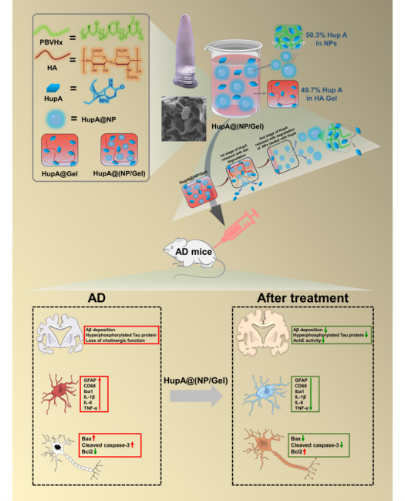
Background: Huperzine A (HupA), a potent and selective acetylcholinesterase inhibitor with neuroprotective properties, faces significant clinical challenges in Alzheimer’s disease (AD) management. Its amphiphilic nature results in poor encapsulation efficiency within conventional hydrophobic polyesters or hydrophilic hydrogels, while its requirement for repeated dosing leads to systemic toxicity and poor patient compliance. Methods: We developed a novel hyaluronic acid (HA)-based biphasic delivery platform. This system utilized a HA gel matrix to encapsulate HupA-loaded polyhydroxyalkanoate nanoparticles (HupA@(NP/Gel)). Its sustained-release efficacy and therapeutic efficacy were evaluated in AD mice through a single administration, followed by behavioral, biochemical, and histopathological analyses. Results: The HupA@(NP/Gel) platform achieved complete drug encapsulation and successfully extended HupA release for over 20 days, matching the therapeutic requirements for AD. This sustained delivery translated to therapeutic efficacy in vivo: it significantly ameliorated core AD pathologies, including reduced Aβ deposition and restored cholinergic function. Moreover, the treatment conferred comprehensive neuroprotection by suppressing glial activation and neuroinflammation, enhancing neuronal survival, and preserving synaptic integrity. Crucially, these multifaceted benefits resulted in improved spatial memory and reduced anxiety/depressionlike behaviors. Conclusions: Our study demonstrates that the HupA@(NP/Gel) system can serve as an effective and translatable strategy for AD intervention. By effectively overcoming the key hurdles of HupA delivery, this work establishes a translatable sustained-delivery strategy that highlights carbohydrate polymer technology’s role in neurologic therapeutics.
Graphical Abstract
Keywords
- Alzheimer’s disease
- huperzine A
- polyhydroxyalkanoates
- nanoparticle
- neuroinflammation